
The Embodied Neural Computation and Awareness Lab at the University of Montana

Research

Here are a few specific areas we’ve focused on in the past, though we’re very broadly interested in exploring the idea that the brain and body act as one, integrated dynamical system to produce our subjective experience and behavior. We have also collaborated outside of our topical focus area, and would be happy to do so again (e.g., to share our methodological expertise).

Self-representation during motor control

To effectively move your muscles, your brain needs to constantly monitor the state of the body, and it needs to know something about the body’s physics. We are interested in how people (and other organisms!) sense and represent the state of their body. Past research has focused on how we may exploit regularities introduced by the body’s biomechanics to link specific motor actions to their sensory consequences.
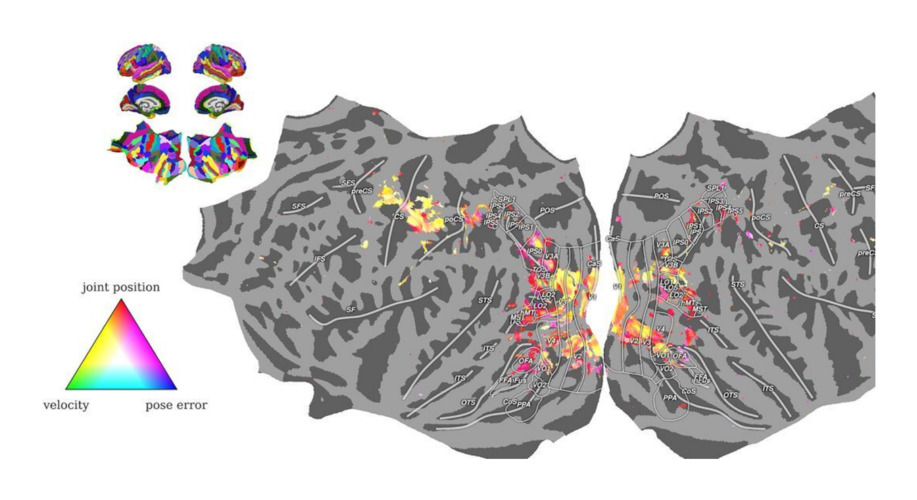
Overlapping Cortical Substrate of Biomechanical Control and Subjective Agency
John P. Veillette, Alfred F. Chao, Romain Nith, Pedro Lopes, Howard C. Nusbaum
The Journal of Neuroscience  ·  24 Mar 2025  ·  doi:10.1523/JNEUROSCI.1673-24.2025
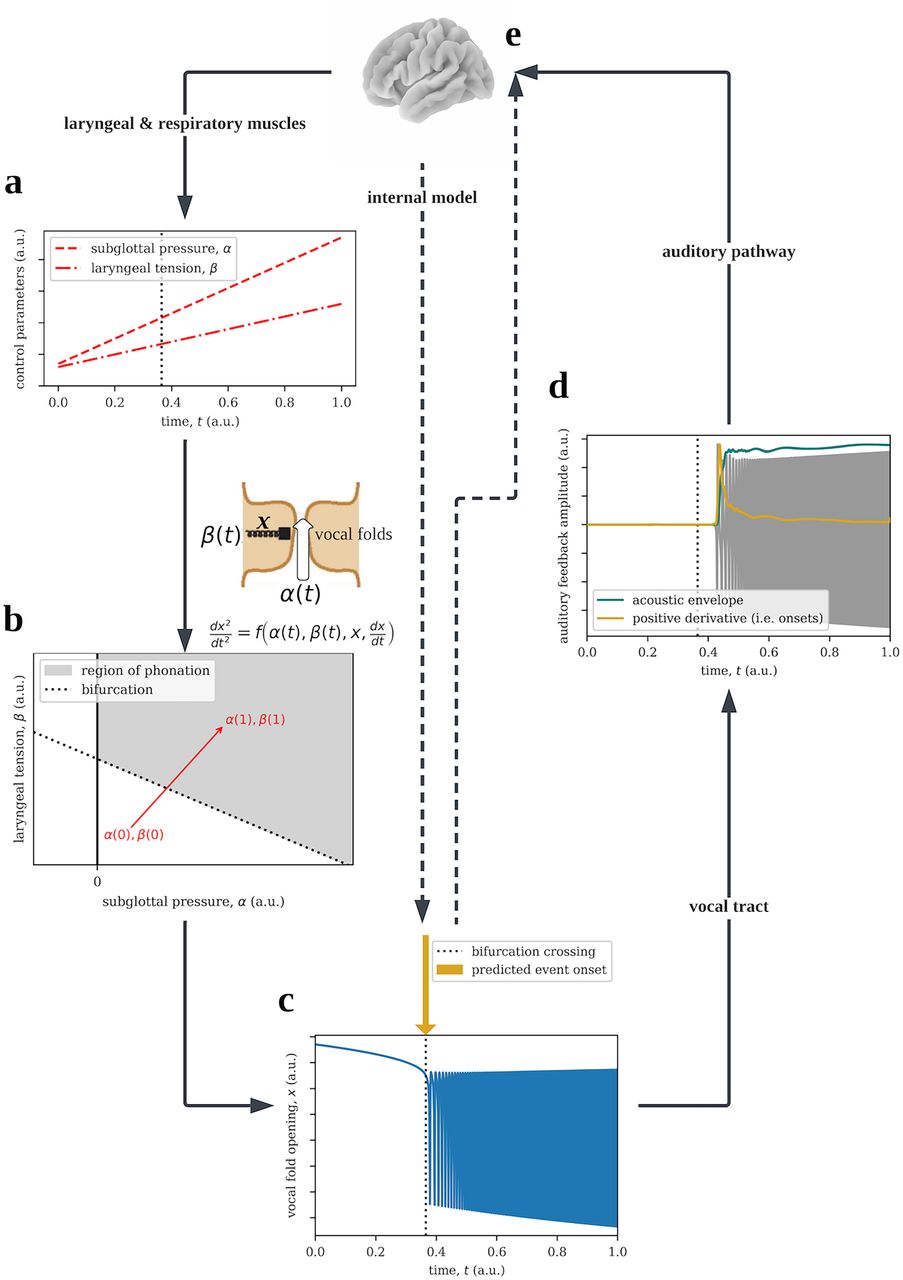
Timing of speech in brain and glottis and the feedback delay problem in motor control
John P. Veillette, Jacob Rosen, Daniel Margoliash, Howard C. Nusbaum
The Journal of Neuroscience  ·  14 Apr 2025  ·  doi:10.1523/JNEUROSCI.2294-24.2025

Conscious awareness of sensorimotor contingencies (i.e., the sense of agency)

Our brain processes self-caused sensations differently from how it processes externally caused sensations, even if we’re not consciously aware we did anything at all. Sometimes though, we sense an event and feel “Hey, I did that!” That’s the sense of agency, and we’re interested in (a) when and why we feel it to begin with and (b) what makes this conscious self-recognition distinct from other types of action-outcome processing in the brain.
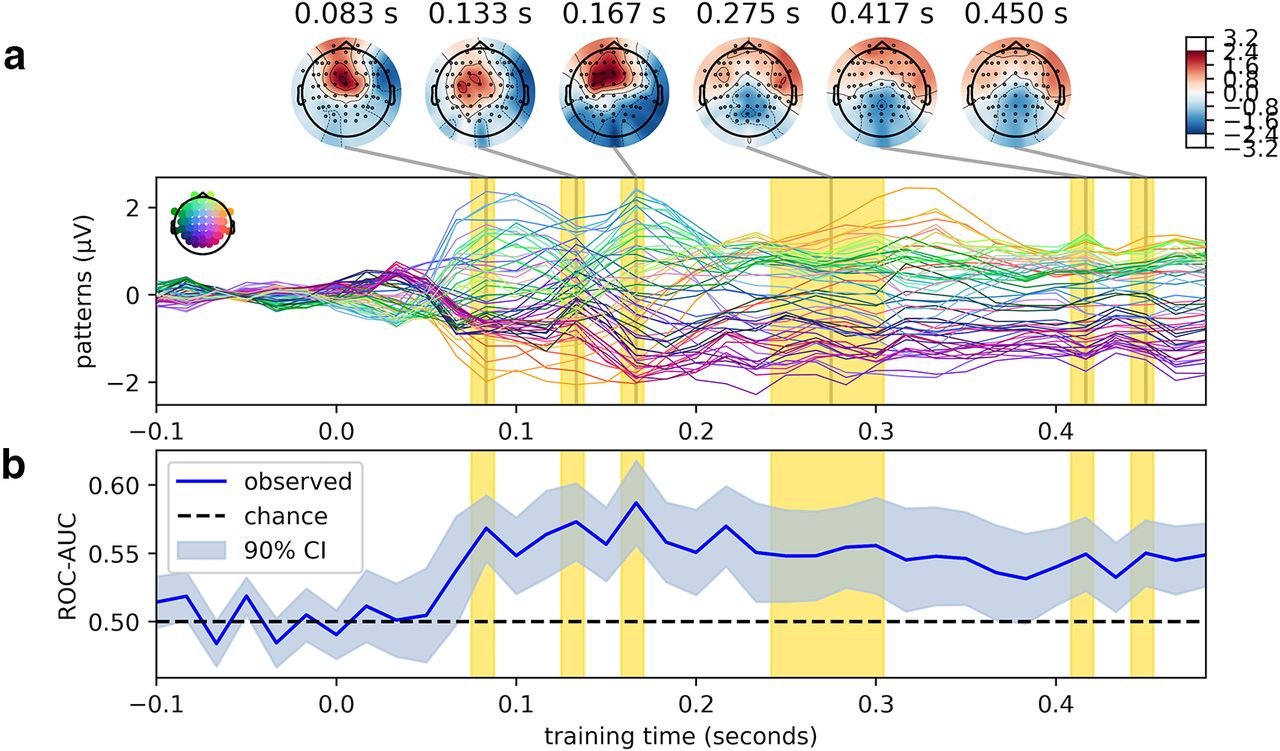
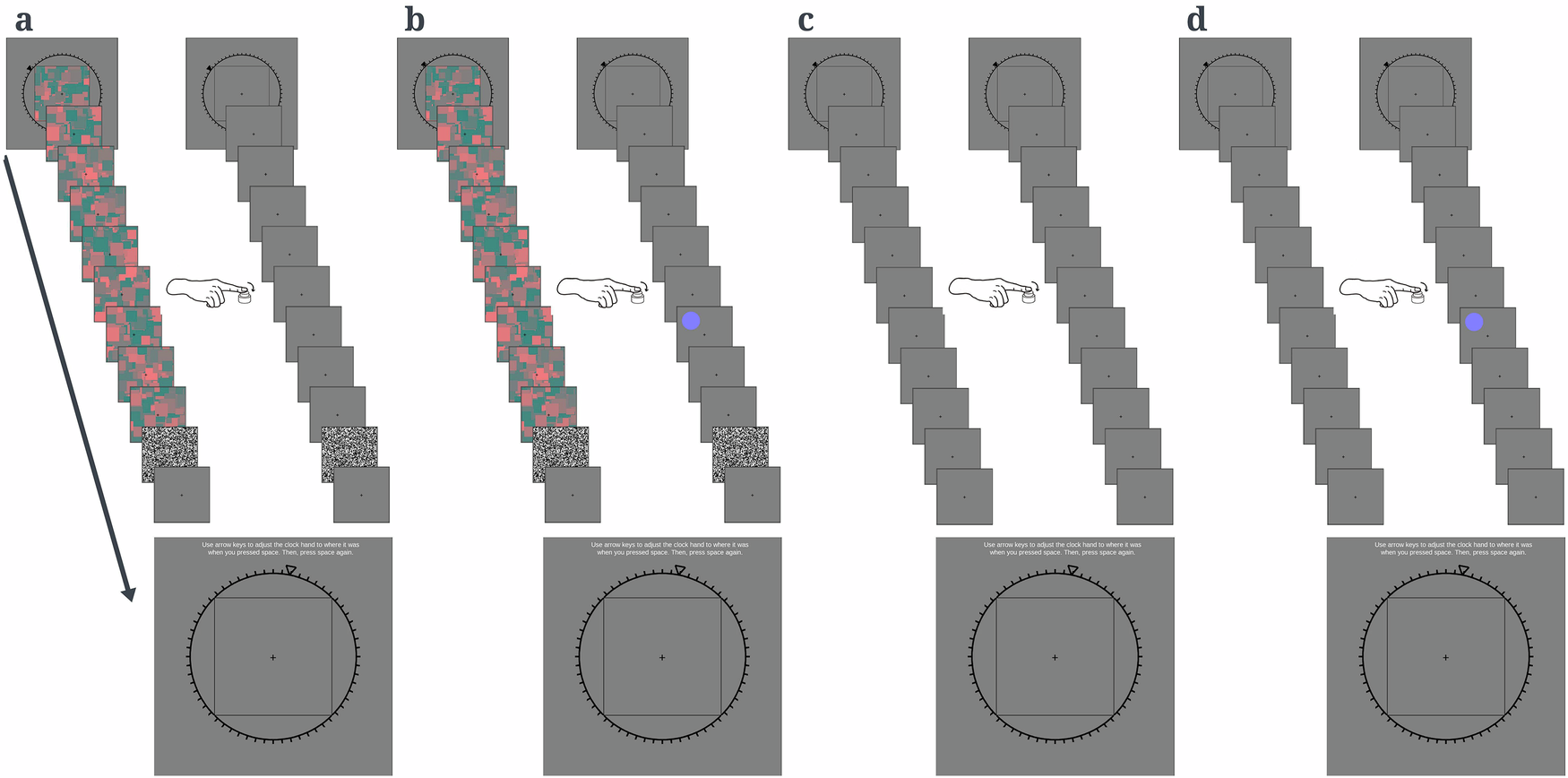
Temporal Dynamics of Brain Activity Predicting Sense of Agency over Muscle Movements
John P. Veillette, Pedro Lopes, Howard C. Nusbaum
The Journal of Neuroscience  ·  18 Sep 2023  ·  doi:10.1523/JNEUROSCI.1116-23.2023
Intentional binding effect depends on conscious access to the sensory consequences of action
John P. Veillette, Yimeng Cheng, Aditi Joshi, Howard C. Nusbaum
Communications Psychology  ·  29 Sep 2025  ·  doi:10.1038/s44271-025-00323-5

Influences of interoceptive sensory signals on exteroceptive perception

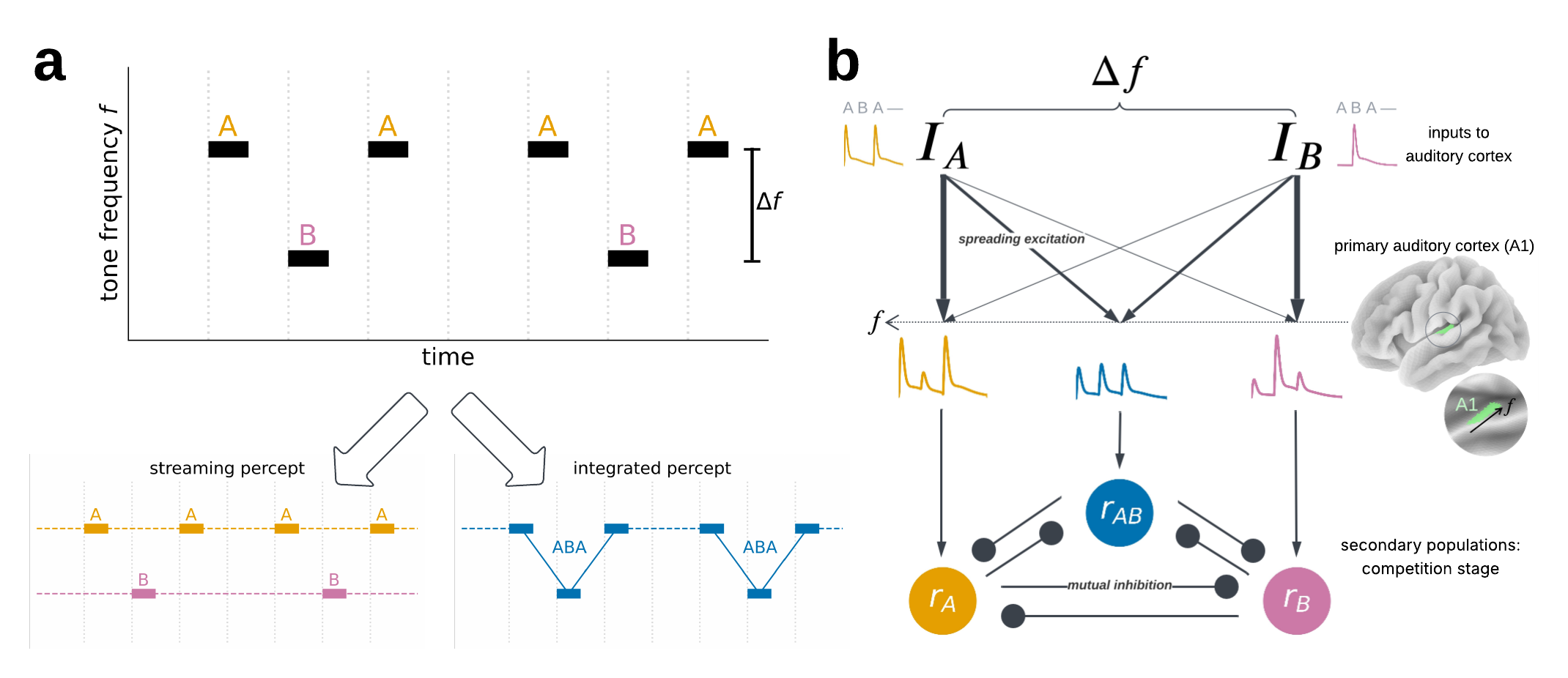
We’re all familiar with our exteroceptive senses: sight, hearing, smell, taste, and touch. Did you know there are also sensory receptors inside the body? These interoceptive senses and responsible for keeping the brain informed about what’s going in in the body’s other organs (e.g.. the heart, lungs, and gut). We’re interested in how interoceptive senses alter brain processes, and how those alterations affect our subjective experiences. A nice illustration: We’ve done some neat studies where participants may perceive the same physical stimulus (e.g., an image) totally differently depending on their heartbeat!

Cardiac afferent signals can facilitate visual dominance in binocular rivalry
John P Veillette, Fan Gao, Howard C Nusbaum
eLife  ·  02 Oct 2024  ·  doi:10.7554/eLife.95599.2
Listening with your heart: The heartbeat shapes auditory object formation by suppressing the early neural response to sound
John P Veillette, Aditi Joshi, Ying Li, Howard C Nusbaum
openRxiv  ·  20 Aug 2026  ·  doi:10.64898/2026.08.17.745255

All

This publication list auto-populates from my ORCID profile, which I find doesn’t always catch new publications. The list on my Google Scholar profile may be a bit more complete.

2026

Listening with your heart: The heartbeat shapes auditory object formation by suppressing the early neural response to sound
John P Veillette, Aditi Joshi, Ying Li, Howard C Nusbaum
openRxiv  ·  20 Aug 2026  ·  doi:10.64898/2026.08.17.745255
White-Knuckled Prosociality: Loneliness increases willingness to exert effort to benefit others
Anita Restrepo, Karen E Smith, Sabina Raja, Cynthia Gaspard, Elizabeth Mickiewicz, Gabe Minchev, John Veillette, Gregory Norman
Center for Open Science  ·  14 Apr 2026  ·  doi:10.31234/osf.io/u2erk_v2

2025

Neural evidence for modality-independent storage in working memory
Darius Suplica, Henry M. Jones, Gisella K. Diaz, John P. Veillette, Howard C. Nusbaum, Edward Awh
Current Biology  ·  01 Oct 2025  ·  doi:10.1016/j.cub.2025.08.007
Intentional binding effect depends on conscious access to the sensory consequences of action
John P. Veillette, Yimeng Cheng, Aditi Joshi, Howard C. Nusbaum
Communications Psychology  ·  29 Sep 2025  ·  doi:10.1038/s44271-025-00323-5
Natural scenes are more compressible and less memorable than human-made scenes
Nakwon Rim, John Veillette, Sunny Lee, Omid Kardan, Sanjay Krishnan, Wilma A. Bainbridge, Marc Berman
Center for Open Science  ·  15 May 2025  ·  doi:10.31234/osf.io/xw3ek_v1
Timing of speech in brain and glottis and the feedback delay problem in motor control
John P. Veillette, Jacob Rosen, Daniel Margoliash, Howard C. Nusbaum
The Journal of Neuroscience  ·  14 Apr 2025  ·  doi:10.1523/JNEUROSCI.2294-24.2025
Overlapping Cortical Substrate of Biomechanical Control and Subjective Agency
John P. Veillette, Alfred F. Chao, Romain Nith, Pedro Lopes, Howard C. Nusbaum
The Journal of Neuroscience  ·  24 Mar 2025  ·  doi:10.1523/JNEUROSCI.1673-24.2025
Bayesian p-curve mixture models as a tool to dissociate effect size and effect prevalence
John P. Veillette, Howard C. Nusbaum
Communications Psychology  ·  23 Jan 2025  ·  doi:10.1038/s44271-025-00190-0

2024

Cardiac afferent signals can facilitate visual dominance in binocular rivalry
John P Veillette, Fan Gao, Howard C Nusbaum
eLife  ·  02 Oct 2024  ·  doi:10.7554/eLife.95599
Cardiac afferent signals can facilitate visual dominance in binocular rivalry
John P Veillette, Fan Gao, Howard C Nusbaum
eLife  ·  02 Oct 2024  ·  doi:10.7554/eLife.95599.2
Metacognition bridges experiences and beliefs in sense of agency
John P. Veillette, Letitia Ho, Howard C. Nusbaum
Consciousness and Cognition  ·  01 Sep 2024  ·  doi:10.1016/j.concog.2024.103745
Timing of speech in brain and glottis and the feedback delay problem in motor control
John P. Veillette, Jacob Rosen, Daniel Margoliash, Howard C. Nusbaum
openRxiv  ·  07 Aug 2024  ·  doi:10.1101/2024.08.07.607082
Bayesian i p i -curve Mixture Models as a Tool to Dissociate Effect Size and Effect Prevalence
Bayesian p -curve Mixture Models as a Tool to Dissociate Effect Size and Effect Prevalence
John P. Veillette, Howard C. Nusbaum
openRxiv  ·  01 Aug 2024  ·  doi:10.1101/2024.07.31.606048
Overlapping Cortical Substrate of Biomechanical Control and Subjective Agency
John P. Veillette, Alfred F. Chao, Romain Nith, Pedro Lopes, Howard C. Nusbaum
openRxiv  ·  24 Jul 2024  ·  doi:10.1101/2024.07.24.604976
Cardiac afferent signals can facilitate visual dominance in binocular rivalry
John P. Veillette, Fan Gao, Howard C. Nusbaum
eLife Sciences Publications, Ltd  ·  11 Apr 2024  ·  doi:10.7554/eLife.95599.1

2023

Cardiac afferent signals can facilitate visual dominance in binocular rivalry
John P. Veillette, Fan Gao, Howard C. Nusbaum
openRxiv  ·  16 Dec 2023  ·  doi:10.1101/2023.12.16.571868
Temporal Dynamics of Brain Activity Predicting Sense of Agency over Muscle Movements
John P. Veillette, Pedro Lopes, Howard C. Nusbaum
The Journal of Neuroscience  ·  18 Sep 2023  ·  doi:10.1523/JNEUROSCI.1116-23.2023
Single-trial visually evoked potentials predict both individual choice and market outcomes
John P. Veillette, Shannon L. M. Heald, Benjamin Wittenbrink, Katherine S. Reis, Howard C. Nusbaum
Scientific Reports  ·  01 Sep 2023  ·  doi:10.1038/s41598-023-41613-4
Metacognition bridges experiences and beliefs in Sense of Agency
John Veillette, Letitia Ho, Howard Nusbaum
Center for Open Science  ·  24 Jul 2023  ·  doi:10.31234/osf.io/4z2rj
Temporal Dynamics of Brain Activity Predicting Sense of Agency over Muscle Movements
John P. Veillette, Pedro Lopes, Howard C. Nusbaum
openRxiv  ·  08 May 2023  ·  doi:10.1101/2023.05.06.539706
Permutation-based group sequential analyses for cognitive neuroscience
John P. Veillette, Letitia Ho, Howard C. Nusbaum
openRxiv  ·  28 Feb 2023  ·  doi:10.1101/2023.02.27.530244

2020

Revisiting discrete versus continuous models of human behavior: The case of absolute pitch
Stephen C. Van Hedger, John Veillette, Shannon L. M. Heald, Howard C. Nusbaum
PLOS ONE  ·  28 Dec 2020  ·  doi:10.1371/journal.pone.0244308